Orthodontic treatment sets the teeth up so they meet properly once the jaws are moved.
Braces come before and after jaw surgery because the surgeon moves the jaws, but it's the orthodontist who lines up the teeth so they meet properly in that new position. If you've been told you might need orthognathic surgery in Los Angeles County, expect orthodontic treatment to start months before the operation and carry on for a while after it.
Here's how the stages fit together, and what to ask before you commit.
Who does what
Orthognathic surgery, also called corrective jaw surgery, is performed by an oral and maxillofacial surgeon. According to the American Association of Oral and Maxillofacial Surgeons, your orthodontist and surgeon work together to decide whether you're a candidate, and the surgeon decides which procedure is right.
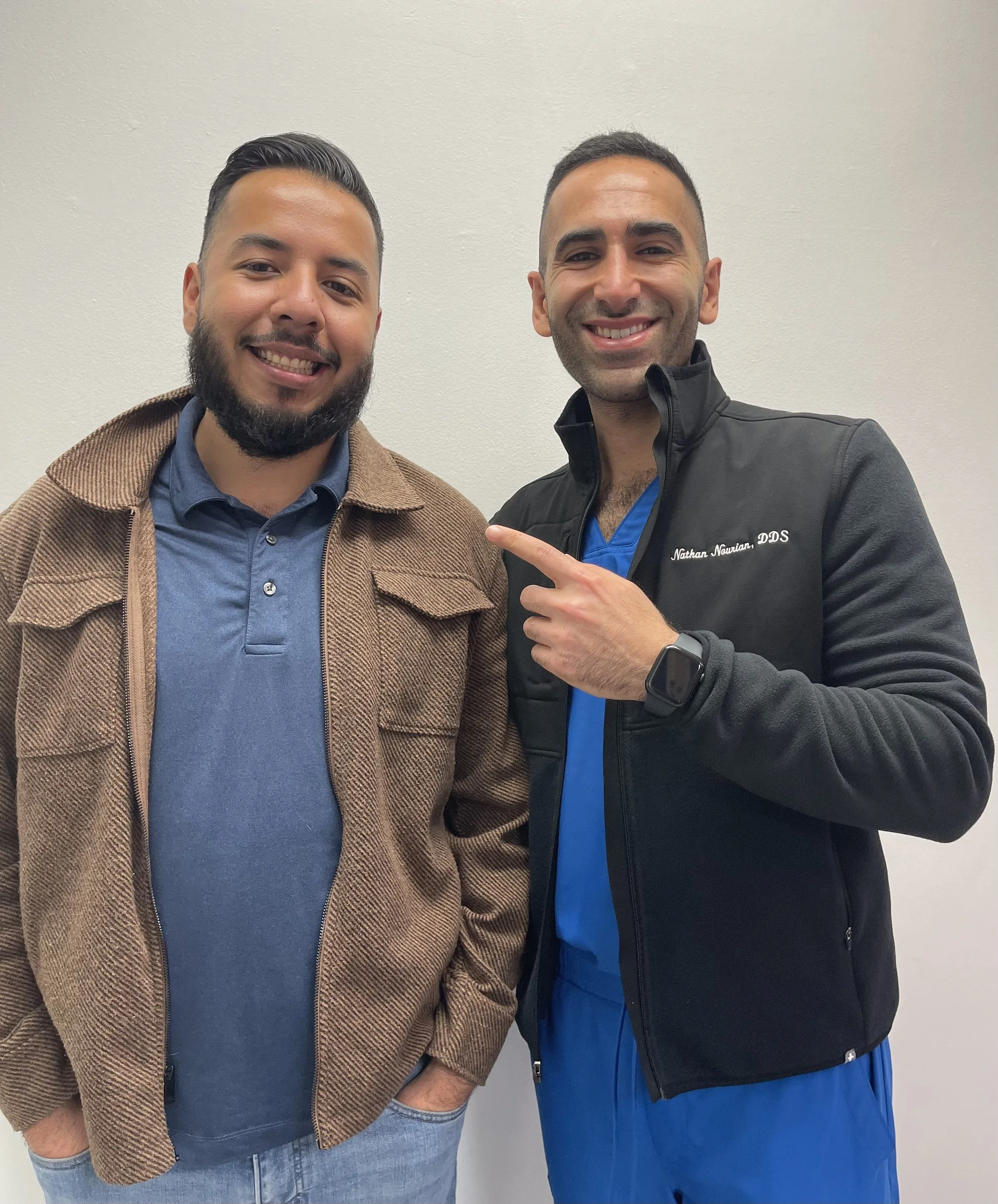
At Textbook Orthodontics, Dr. Nathan Nourian handles the orthodontic side. He aligns the teeth with braces before and after surgery and plans each step with the oral surgeon. Complex bite correction and surgical orthodontics are among his main clinical interests.
Why braces come before orthognathic surgery
Before surgery, the teeth are moved into the positions they'll need once the jaws are corrected, not the positions that suit your bite today. That surprises people, because the bite can look or feel worse during this stage. It's expected. Teeth often tilt over the years to make up for a jaw that's too far forward or back, and straightening them up first lets the surgeon move the jaw the full distance it needs.
This stage usually takes many months. Dr. Nourian will give you a realistic estimate at your consultation once he's seen your records.
Planning the surgery together
The surgery is planned by a team, typically the oral surgeon and the orthodontist, sometimes with a speech therapist. Digital imaging and 3D-printed jaw models help them plan exactly how far each jaw should move and how the teeth will meet afterwards.
Before the operation you may be asked to change your diet, stop smoking or adjust medication. The surgery itself is done under general anesthesia, and most patients stay in the hospital for one to two days.
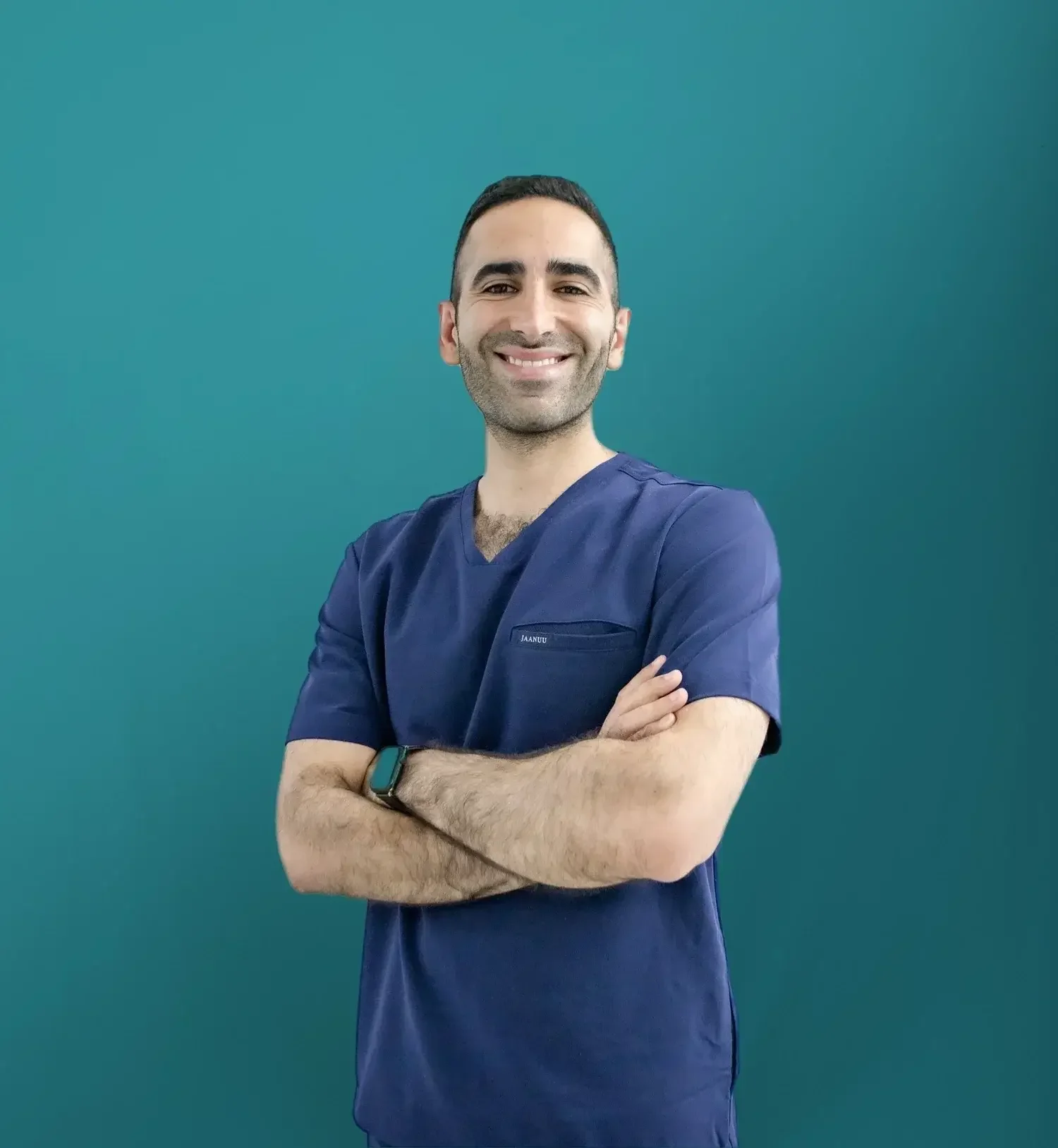
Dr. Nourian manages the orthodontic side of treatment and plans each step with the surgeon.
Why braces stay on after surgery
Once the jaws are in their new position, the braces are used to fine-tune how the teeth fit together. Follow-up visits monitor healing and adjust the orthodontics. If the jaws are wired, that usually lasts around six weeks, though wiring isn't always needed. The AAOMS puts initial jaw healing at about six weeks, with complete healing taking longer.
When the bite is settled, the braces come off and retainers hold the result, just as they do after any orthodontic treatment.
What recovery looks like
Expect a liquid or soft-food diet for the first days after surgery. Most patients are back to their normal activities within a few weeks, although full recovery takes several months. Your surgeon may also recommend gentle jaw exercises or physical therapy to rebuild strength and movement. Orthodontic visits continue through this period, so Dr. Nourian can adjust the braces as the bite settles.
When surgery is possible
Jaw surgery normally waits until growth has finished. Surgery may be possible at 17 or 18 once the jaws have stopped growing, and the surgeon's evaluation decides the exact timing. There's no upper age limit, and many patients are adults.
Common reasons for surgery include a severe overbite, underbite or open bite, a receding or protruding jaw, chronic jaw or TMJ pain, difficulty chewing or breathing and obstructive sleep apnea when other treatments haven't worked. Our post on conditions orthognathic surgery can correct covers these in more detail, and the underbite treatment page explains when braces alone may be enough.
Risks worth knowing about
Like any surgery, jaw surgery carries risks. These include infection, bleeding, swelling and bruising, and temporary or permanent nerve damage. Upper jaw surgery can cause more facial swelling and sinus problems, and lower jaw surgery can leave numbness or tingling. Speech may be affected at first and usually recovers with time. A second operation is rarely needed. Your surgeon will go through these with you in detail before anything is booked.
Insurance and cost
Coverage depends on your plan and the reason for surgery. Treatment that's medically necessary is more likely to be covered than treatment that's mainly cosmetic, so check with your insurer before you start. For the orthodontic side, the Textbook Orthodontics team verifies your orthodontic coverage before your first visit and files claims with major insurers for you. In-office financing with 0% interest is available, along with longer-term plans through Cherry, HFD and CareCredit.
Frequently asked questions
Can I have jaw surgery without braces?
Usually not. The surgery and the orthodontics are planned as one treatment, because the teeth need to fit together once the jaws are moved.
Is orthognathic surgery cosmetic?
The main aim is function: chewing, biting, speaking and breathing more comfortably. Changes to facial balance are often a side effect, not the reason for surgery.
Will there be scars?
Incisions for most jaw surgery are made inside the mouth, so visible scars on the face are uncommon. Your surgeon will confirm this for your procedure.
Do I have to be an adult?
Surgery normally waits until jaw growth has finished, which is often around 17 or 18. Younger patients can still start orthodontic treatment and be monitored until the timing is right.
How long will I wear braces overall?
It depends on your case. Dr. Nourian will set out the expected length of each stage at your consultation.
Talk to us about orthognathic surgery in Los Angeles County
Your free consultation includes a clinical exam, digital X-rays and photographs and a 3D scan of your bite, followed by a treatment plan that sets out whether surgery is likely to be needed. Every patient is treated by Dr. Nourian personally. We see patients considering orthognathic surgery in Los Angeles County at all four offices.
Panorama City: 8424 Van Nuys Blvd, Panorama City, CA 91402. Call (818) 510-3440.
Los Angeles: 1563 S. Western Ave, Los Angeles, CA 90006. Call (213) 933-6370.
Hawthorne: 14248 Hawthorne Blvd, Hawthorne, CA 90250. Call (310) 751-3098.
Whittier: 14564 Whittier Blvd, Whittier, CA 90605. Call (562) 693-8202.
Book a free consultation: https://textbookorthodontics.com/consultation