
Braces That Feel Lighter: How Low-Friction Brackets Change Your Treatment Experience
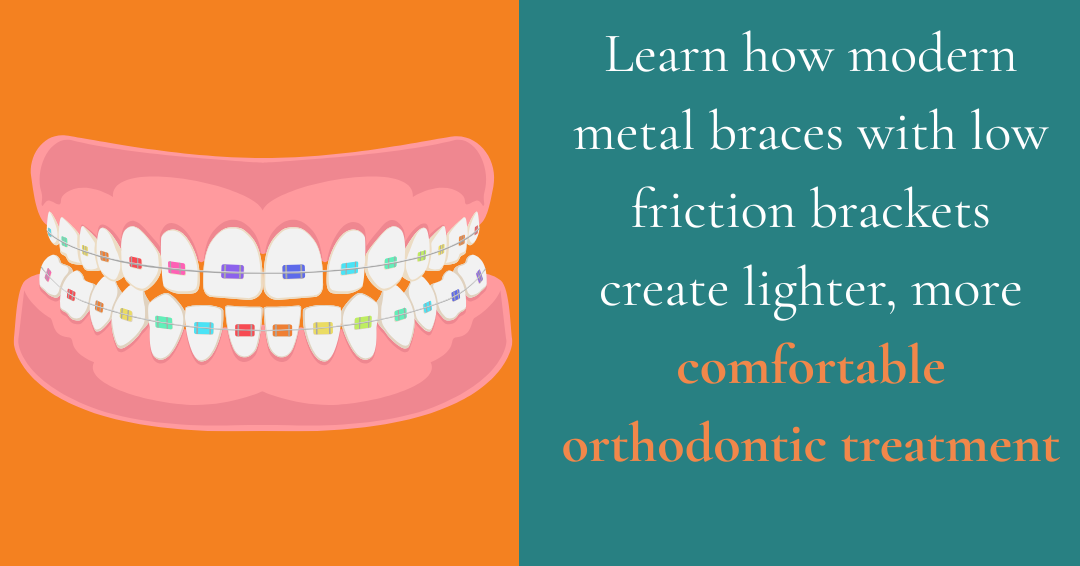
When most people think of metal braces, they picture a lot of force, tight wires, and long appointments. But today’s orthodontic technology has changed the way teeth move. At Textbook Orthodontics, we use low-friction brackets, often called self-ligating brackets, that help teeth move more smoothly and comfortably. Instead of relying on heavy pressure, these brackets use lighter, consistent forces that guide teeth into place with less strain.
If you live in Burbank and are looking into braces, understanding how low-friction systems work can help you choose the right treatment for your smile.
What Makes Low-Friction Metal Braces Different?
Traditional metal braces use elastic ties to hold the wire in place. These elastics can create extra friction, which means the teeth need a stronger force to move. Low-friction or self-ligating brackets use a small built-in door or clip instead of elastic ties. This allows the wire to slide smoothly as the teeth shift.
Less friction means:
Gentler forces
More predictable movement
Shorter appointments
Fewer adjustments
Better comfort over time
This is one of the biggest upgrades in modern orthodontics. Instead of relying on tightness, low-friction brackets work with the natural movement of the teeth.
Sliding Mechanics: How Teeth Glide Instead of Straining
The key difference with these metal braces is how the wire slides through the brackets. With traditional braces, the wire can stick slightly, making movement slower and less comfortable. Low-friction systems use smooth, rounded surfaces that help the wire glide.
This sliding motion leads to:
Steady movement without force spikes
Less stress on the roots
Fewer sore days after adjustments
More efficient progress
Because the wire moves more freely, the teeth respond better to gentle pressure. This is helpful for patients who want effective results without the intense tightness they may have heard about from older braces.
Heat-Activated Archwires: Gentle Force That Adjusts With Your Body
Another upgrade in modern metal braces is the use of heat-activated archwires. These wires respond to the temperature inside your mouth. When warmed, the wire becomes more flexible and applies light, steady pressure.
Heat-activated wires help by:
Reducing discomfort after adjustments
Allowing teeth to move continuously
Avoiding sudden or heavy force
Adapting to your natural bite changes
As your mouth warms the wire, it gently returns to its original shape, guiding the teeth along with it. This is a smooth, predictable way to straighten teeth without the heavy tightening associated with older-style braces.
Why Lighter Force Leads to Faster Adaptation
It may sound surprising, but a lighter force often moves teeth more efficiently than strong pressure. Teeth respond best to gentle, consistent guidance. When too much pressure is used, the body may slow down the process to protect the bone and roots.
Low-friction metal braces use a “light-force philosophy,” meaning:
Teeth stay healthier during movement
The body adapts more quickly
Gums stay more comfortable
Teeth glide instead of resisting
This approach is supported by decades of research showing that slow, steady pressure leads to smoother progress. For many patients, this means fewer sore days and easier adjustment to braces.
Comfort Benefits You Can Feel
Comfort is one of the biggest advantages of low-friction systems. Patients often report:
Less pressure during the first few weeks
Less rubbing from the brackets
Easier brushing without elastic ties
Shorter visits at each appointment
Because the brackets are smaller and smoother, they sit more naturally against the lips and cheeks. Many people who worry about discomfort with metal braces feel surprised by how easy these updated brackets are to live with.
How Self-Ligating Metal Braces Improve Efficiency
Low-friction brackets can make appointments faster and improve overall treatment flow. Here’s how:
1. No elastic ties to change
Since the wire is held with a small clip, there’s no need to remove and replace elastics, which saves time.
2. Wires slide more easily
This allows teeth to move continuously between visits without needing frequent adjustments.
3. More predictable movement
With fewer barriers, the path of movement is smoother, which often leads to clearer treatment timelines.
When your braces move teeth efficiently, the entire process becomes more manageable.
Are Low-Friction Metal Braces Right for You?
These upgraded metal braces work well for teens and adults who want strong, reliable tooth movement with minimal discomfort. They’re especially helpful for:
Crowded teeth
Rotations that require extra guidance
Bite corrections
Patients who want fewer adjustments
People who prefer braces over aligners
Because the brackets apply gentler pressure, many patients find them easier to adapt to, especially during the first few weeks.
What to Expect at Our Burbank Office
When you visit our Burbank location, we’ll examine your bite, spacing, and alignment to see if low-friction braces are a good match. We explain how the brackets work and show how sliding mechanics and heat-activated wires guide your teeth.
Most patients appreciate how straightforward the process feels:
A smooth start with a bonding appointment
Light pressure instead of tight wires
Steady progress between visits
Predictable movement with less soreness
Your treatment plan is designed to keep you comfortable while guiding your teeth into a stable, healthy position.
A Modern Way to Straighten Your Teeth
Low-friction metal braces bring together smart engineering, gentle force, and steady movement. For patients in Burbank looking for a modern option that fits easily into daily life, this system offers a thoughtful balance of strength and comfort.
If you’re ready to learn more, we’re here to help you explore how this technology can support your smile at Textbook Orthodontics.
