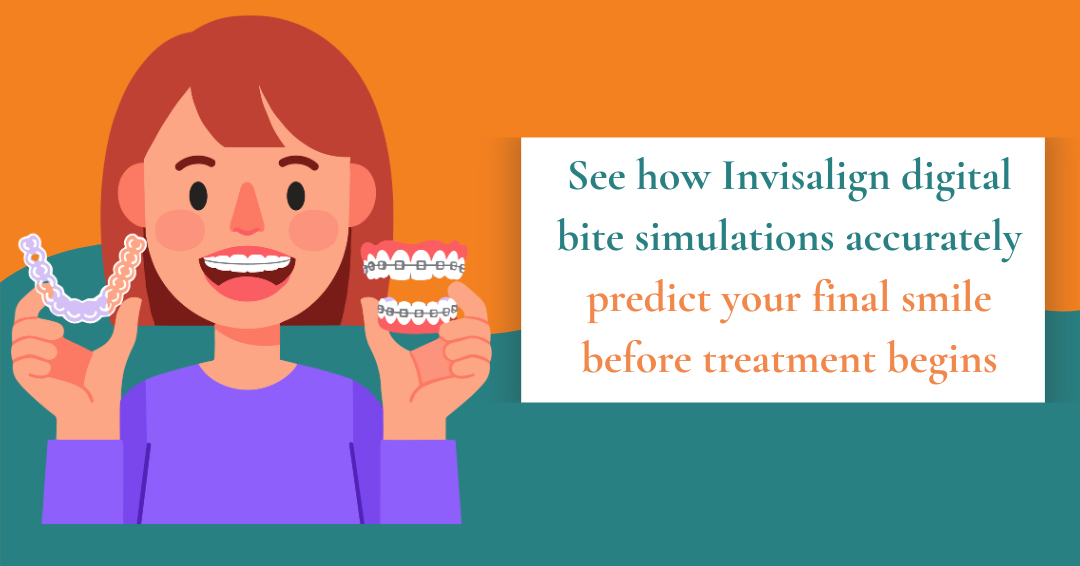
As we reach the end of 2025, Invisalign has become more advanced than ever before. Clear aligners used to be seen as an option mainly for mild cases, but today’s technology has changed that. With digital bite simulations, we can now predict how your teeth will move and how your bite will settle with surprising accuracy. At Textbook Orthodontics, we use these tools every day to design treatment plans that are clear, visual, and easy for you to understand.
If you’ve been considering Invisalign or are comparing it to braces, knowing how these digital tools work can help you feel more confident about your treatment journey.
What Digital Bite Simulations Actually Do
Digital bite simulations are more than a simple “before-and-after” picture. They show how your teeth will move step by step and how your bite will look once Invisalign treatment is complete. The system studies how each tooth rotates, tilts, or shifts. It also shows how your upper and lower teeth meet, something that matters for chewing, comfort, and long-term stability.
When your Invisalign plan is created, these simulations help us spot potential issues early. If we see something that needs correction, we adjust the plan before your first aligner is even made.
This careful planning is one of the reasons Invisalign treatment in 2025 has become so reliable.
Predictive Tooth Movement: Better Than Older Versions
A few years ago, aligners could only estimate movement based on basic patterns. Now, the system uses data collected from millions of real treatments. This helps us predict:
● How fast will your teeth respond
● What type of movements might need extra support
● Whether attachments or elastics might be needed
● How your bite will settle as teeth move
Invisalign has grown smarter because it continues learning from every completed case. That means your treatment plan benefits from updated technology, not guesswork.
When we show patients their digital plan, they often find it exciting to see their future smile mapped out so clearly.
Occlusal Contact Mapping: Understanding How Your Bite Will Land
Your smile is more than straight teeth. A comfortable bite is important for talking, chewing, and avoiding tooth wear. This is where occlusal contact mapping helps.
Invisalign’s updated system highlights exactly where your upper and lower teeth will touch at the end of treatment. We can see:
● If pressure is uneven
● Whether certain teeth are hitting too hard
● Areas that need adjustment
● How to shift teeth to create a healthy bite
This helps prevent future problems such as grinding, early wear, or bite imbalance. For many patients, this is the first time they’ve seen their bite displayed so clearly. It makes the Invisalign planning process simple to understand and gives us a smarter way to guide final results.
AI-Guided Attachment Planning: Small Shapes With a Big Job
Attachments are tiny, tooth-colored shapes placed on certain teeth to help aligners grip and move them. Earlier versions of Invisalign relied mostly on general guidelines to choose where attachments should go.
Today, the system uses AI-supported planning to suggest:
● The best attachment shapes
● Which teeth need them
● How many are required
● Whether rotating or pulling a tooth needs more assistance
● When attachments can be removed
This helps us avoid unnecessary attachments and makes treatment more comfortable. It also improves efficiency because the system knows which movements need extra help and which do not.
Many patients who used Invisalign years ago are surprised to learn how precise attachment planning has become.
The Difference Between Invisalign in 2020 and the Version We Use Now
If you compared a 2020 Invisalign plan to a 2025 plan, the upgrades would be easy to see.
Here’s how today’s system stands out:
1. Better accuracy
The current technology predicts tooth movement and bite results with far more precision. This leads to fewer refinements and smoother progress.
2. More detailed control of the bite
Earlier systems focused mostly on alignment. Now we can design how your bite will settle, not just how the teeth will look.
3. Smarter software
The planning tool learns from a much larger database, improving the quality of the final simulation.
4. Faster, clearer reviews
Patients understand their Invisalign plan immediately because the visuals are clean and easy to follow.
5. Improvements in fit and comfort
Aligner edges and pressure points have been redesigned based on thousands of real-life results.
These changes make Invisalign in late 2025 far more advanced, predictable, and adaptable than older versions.
Why These Updates Matter for Your Smile
Digital bite simulations help us choose the safest and most efficient path for your teeth. When your plan starts with a sharp, accurate preview, your treatment becomes smoother and more comfortable.
Here’s what patients appreciate about the latest Invisalign technology:
● You can see your future smile before treatment even begins.
● You understand how your bite will look and feel.
● You know which teeth are moving and why.
● You get fewer surprises along the way.
● Your aligners are designed with better precision.
When we combine this technology with our careful planning at Textbook Orthodontics, your treatment becomes easier to follow and easier to trust.
Your New Smile Starts With Clear Planning
If you’re thinking about Invisalign, now is a great time to explore your options. As we move toward the close of 2025, these digital upgrades continue to make aligner treatment more accurate and comfortable for patients of all ages.
You’re welcome to schedule a visit so we can scan your teeth and show you what your future smile could look like, step by step, bite by bite, and with far greater accuracy than ever before
