
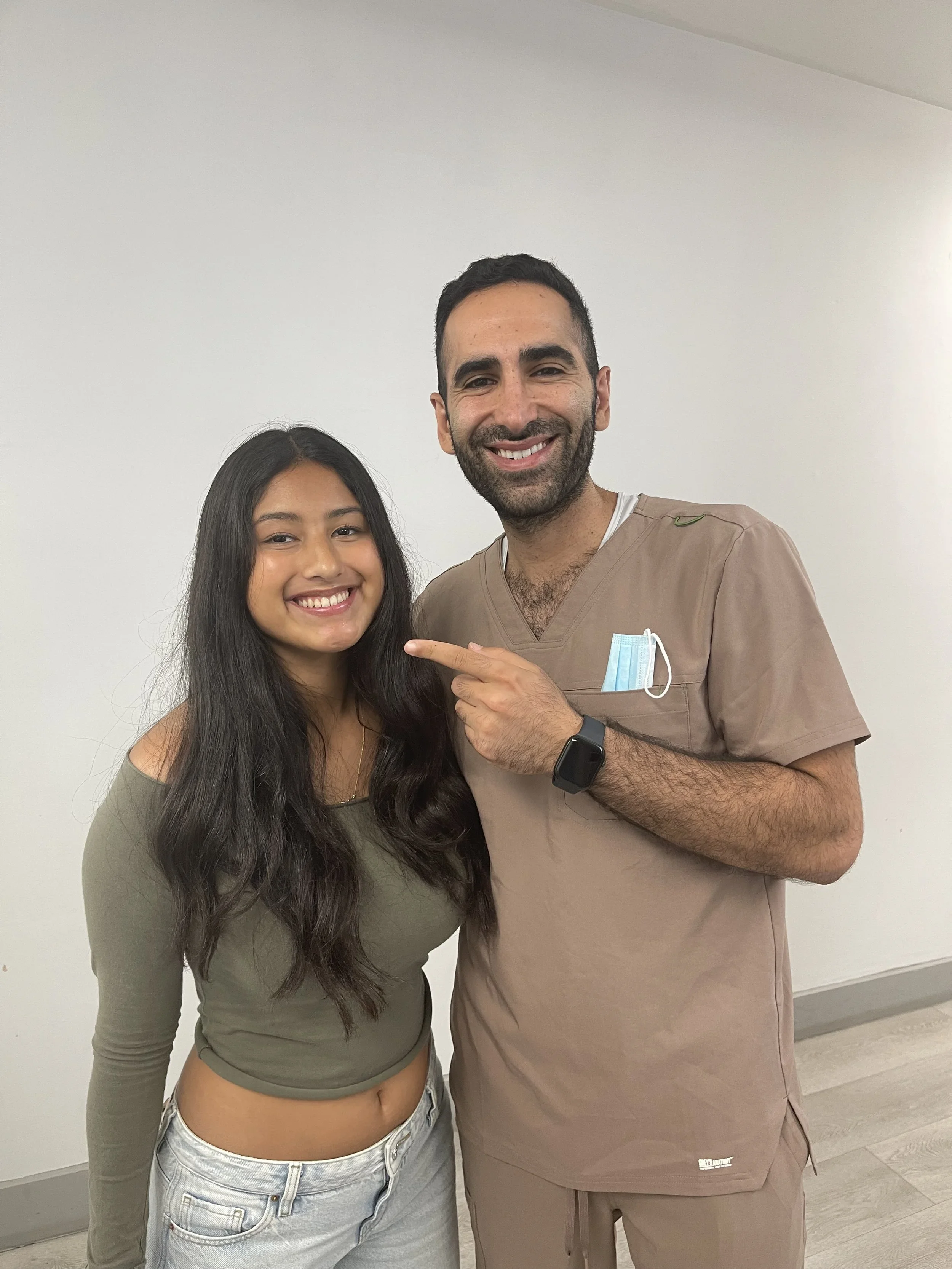
Soreness after braces go on is short-lived. The result lasts much longer.
Getting ceramic braces put on doesn't hurt. The soreness comes afterwards, usually starting within a day as your teeth begin to move, and it eases over the next few days. If you're considering ceramic teeth braces because you like how discreet they are, the first week is very manageable once you know what to expect.
What happens on the day your braces go on
The appointment itself is the easy part. Each ceramic bracket is bonded to the front of a tooth with a dental adhesive, an archwire is threaded through the brackets and it's held in place with small ties. There are no injections, and nothing is drilled. For most patients, the hardest thing is keeping their mouth open for a while.
In many cases you can have your braces placed on the same day as your consultation, if braces are right for you and you're ready to start.
When the soreness starts and how long it lasts
Dr. Nathan Nourian tells his braces patients to expect to feel sore for about 72 hours. It takes roughly a day or two for the fibers around each tooth to respond to the wire's pressure, so many people feel fine on day one and notice tenderness when they bite into food on day two.
After that, it fades. You may feel some pressure again for a few days after each adjustment visit, but it's usually milder than the first week.
Your cheeks and lips are the other source of discomfort. They aren't used to brackets yet, so they can feel rubbed for the first week or two until they toughen up. Wax helps a lot here. A small ball pressed over the bracket that's rubbing gives the inside of your cheek a smooth surface, and you can take it off before you eat.
Do ceramic teeth braces hurt less than metal?
Not where your teeth are concerned. Ceramic and metal braces move teeth the same way, so the pressure on the teeth is about the same with either.
The difference is how the brackets sit against your mouth. Ceramic brackets are smoother and less bulky, which reduces the irritation to gums and cheeks that people often notice with metal. Modern brackets are made from polycrystalline ceramic, which is much stronger than older versions, and self-ligating brackets don't need elastic ties at all, giving them an even lower profile.
So if cheek rubbing is what you're dreading, ceramic is a sensible choice. If your worry is tooth tenderness, the bracket material won't change much. At Textbook Orthodontics, ceramic brackets are offered mainly to adults and metal braces mainly to kids, although teens often choose ceramic too.
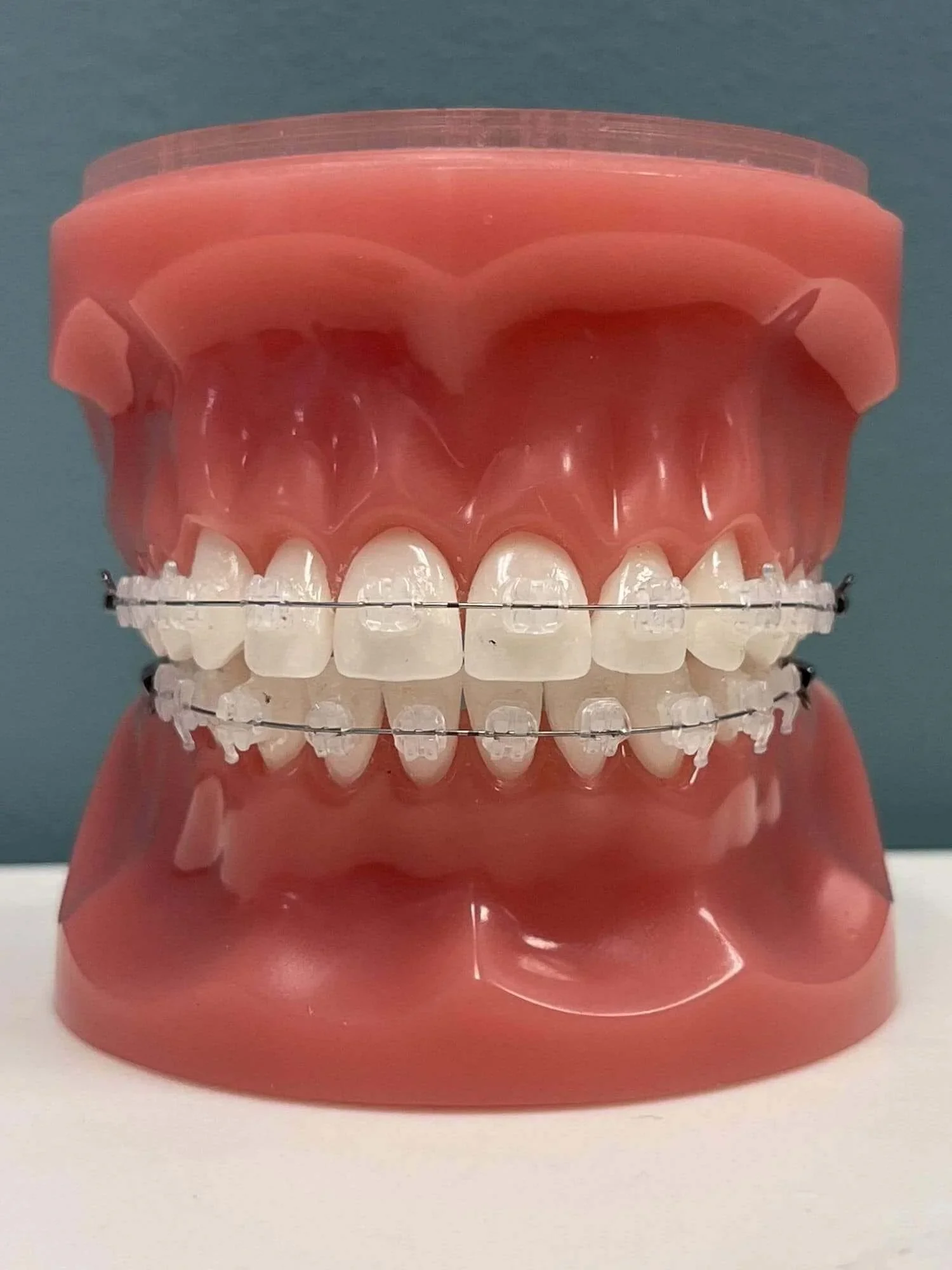
Ceramic brackets are smoother and less bulky than metal, which helps with cheek irritation.
Easing the first few days at home
Eat soft foods while your teeth are tender, and cut food into small pieces.
Eat sandwiches and burgers with a knife and fork rather than biting into them.
Press a small piece of orthodontic wax over any bracket that's rubbing.
Use over-the-counter pain relief such as Tylenol or Advil if you need it, following the directions on the pack.
Dr. Nourian's care instructions suggest exactly these steps, and most people only need them for the first few days.
Looking after ceramic brackets
Ceramic is slightly more fragile than metal, so avoid hard and sticky foods and don't chew on ice or pens. Brackets can also pick up stains if they aren't cleaned well, which is easy to prevent with good brushing. Our guide on how to prevent ceramic braces from staining covers the foods and habits to watch.
Dr. Nourian recommends brushing two to three times a day, flossing daily with a floss threader and having a dental cleaning every three months during treatment.
When soreness isn't normal
Tenderness that fades over a few days is expected. Call the office if you have sharp pain that gets worse instead of better, a wire that's cutting your cheek and won't stay covered with wax, or a bracket that's come loose. If a bracket does break, our post on what to do if you break a ceramic bracket explains the next steps.
Let us know about any latex allergy before treatment, too. Most orthodontic elastics contain latex, and there are alternatives.
Is ceramic right for you?
Treatment with ceramic braces usually takes between 12 and 36 months, depending on your case, which is about the same as metal. They suit adults and teens who want their braces to be less noticeable, and they can treat crowding, spacing and bite problems. You can compare the options in our guide to metal, ceramic and lingual braces, or read about ceramic braces for teens.
Every patient at Textbook Orthodontics is treated by Dr. Nourian personally, from the first consultation through retainer delivery, and in-office financing with 0% interest is available.
Frequently asked questions
Does getting braces hurt?
Having the brackets placed isn't painful. Soreness usually starts a day or so later, once the wire begins moving your teeth.
Do adjustment visits hurt?
You may feel pressure for a few days after the wire is changed or tightened. It tends to be milder than the first week.
Will ceramic braces stain?
They can if they aren't cleaned properly. Good brushing and a little care with strongly colored foods and drinks keep them looking clear.
How long will I wear ceramic braces?
Usually between 12 and 36 months, depending on how much your teeth need to move.
Can I go to work or school the day my braces go on?
Yes. Most people go straight back to their day. You might want soft food for dinner that evening, and a little wax in your bag for the first week.
Does it hurt when ceramic braces come off?
Most people feel firm pressure for a few seconds per tooth while the brackets are removed, rather than pain. The bigger feeling is usually seeing your teeth without brackets for the first time.
Book a ceramic teeth braces consultation
Your free consultation includes a full exam, digital X-rays and photographs and a 3D scan of your bite, so you'll know whether ceramic teeth braces are the right fit before anything goes ahead. There's no pressure to start that day.
Panorama City: 8424 Van Nuys Blvd, Panorama City, CA 91402. Call (818) 510-3440.
Los Angeles: 1563 S. Western Ave, Los Angeles, CA 90006. Call (213) 933-6370.
Hawthorne: 14248 Hawthorne Blvd, Hawthorne, CA 90250. Call (310) 751-3098.
Whittier: 14564 Whittier Blvd, Whittier, CA 90605. Call (562) 693-8202.
Book a free consultation: https://textbookorthodontics.com/consultation