
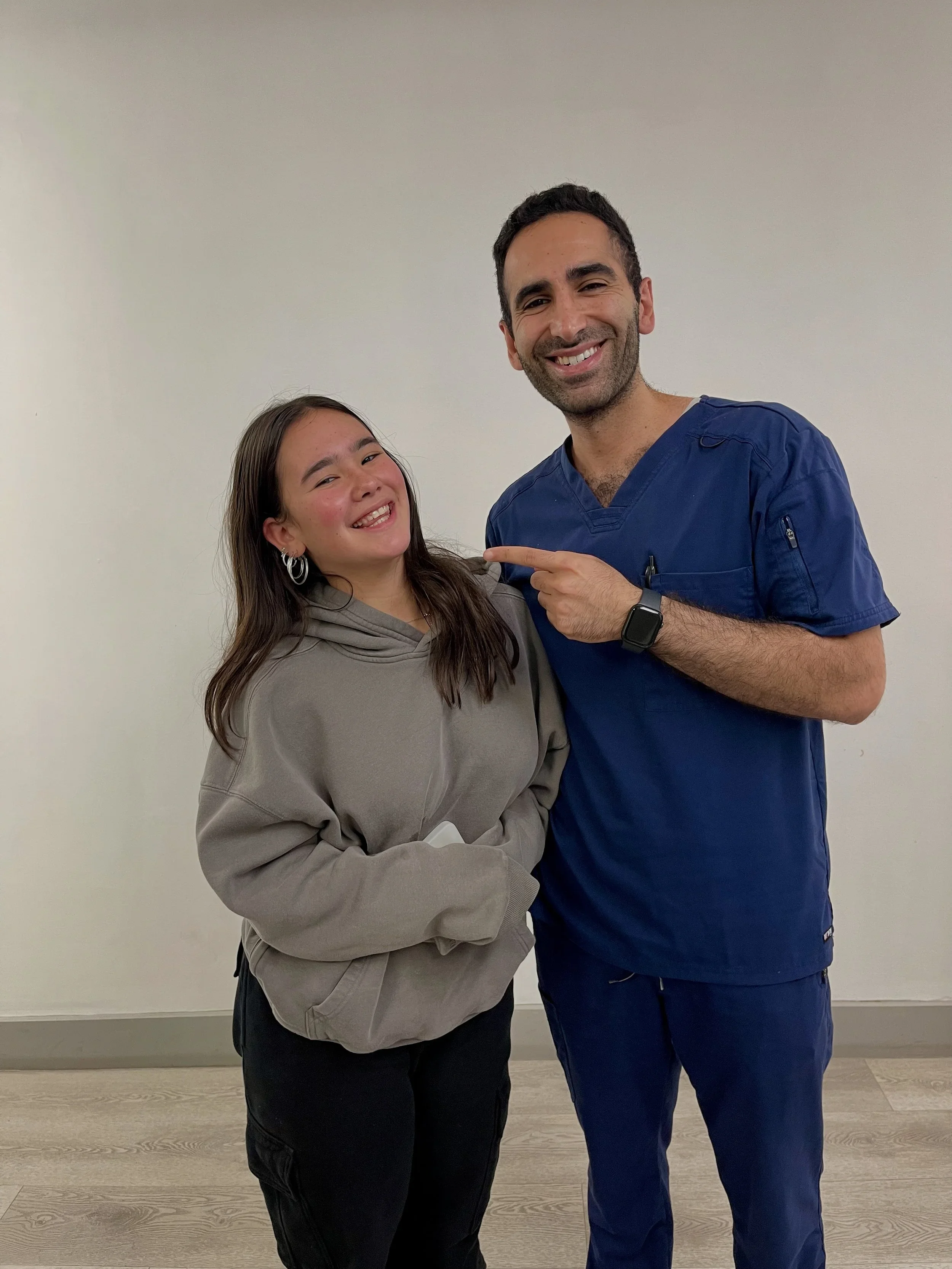
Regular check-ins confirm your teeth are keeping pace with your aligners.
Invisalign is working when each new set of aligners feels snug for a day or two, then sits fully over every tooth by the end of its stage. If you're having Invisalign in Glendale and wondering why the mirror hasn't changed much, that's normal. Teeth move in small, planned steps, and the clearest signs are in how your trays fit rather than how your smile looks day to day.
Here's what to look for, and what to do if something seems off.
How Invisalign moves your teeth
Before your first aligner is made, your teeth are scanned and every movement is planned step by step. Each tray is shaped slightly differently from the last, and you switch to the next one on a set schedule. Short check-ins then confirm your teeth are moving as planned.
At Textbook Orthodontics, Dr. Nathan Nourian plans and checks all treatment himself. Invisalign's planning software is a starting point, not the plan. He adjusts the movements around your bite and root positions before any aligners are ordered.
Signs your Invisalign is working
The clearest sign is the fit of each new tray. A fresh aligner should feel tight and press gently for the first day or two, then ease off as your teeth settle into it. That pressure is the tray doing its job.
By the end of each stage, the aligner should sit flush against every tooth, with no gaps along the edges. Over weeks, you may notice spaces closing, crowded teeth lining up or your bite feeling different when you close.
Photos help more than the mirror. Take one on day one, then every few weeks in the same light. Slow change is hard to see in person but obvious side by side.
How to tell if Invisalign is not tracking
"Tracking" means your teeth are keeping up with the aligners. When a tooth falls behind, you'll usually see it.
A small air gap between the tray and the tip or edge of a tooth, often on one tooth rather than all of them
A tray that won't click fully into place
Attachments (the small tooth-colored bumps) that don't line up with their pockets in the tray
A new tray that feels much harder to fit than usual
A quick way to check is to look at each tooth in the mirror after a tray has been in for a few days, running along the edges from one side to the other. If one tooth shows a gap and its neighbors don't, that's the one to mention.
Attachments and elastics are a normal part of many plans, and our post on Invisalign attachments and elastics explains what they do.
What to do if your aligners aren't tracking
Don't skip ahead to the next tray and hope it catches up. Call the office before you switch. Depending on what's happening, Dr. Nourian may ask you to stay in your current tray for longer, check how it's seating or adjust the plan.
Chewies, the small cushions you bite on to press trays into place, can help a tray seat properly. Our guide to using chewies shows how.
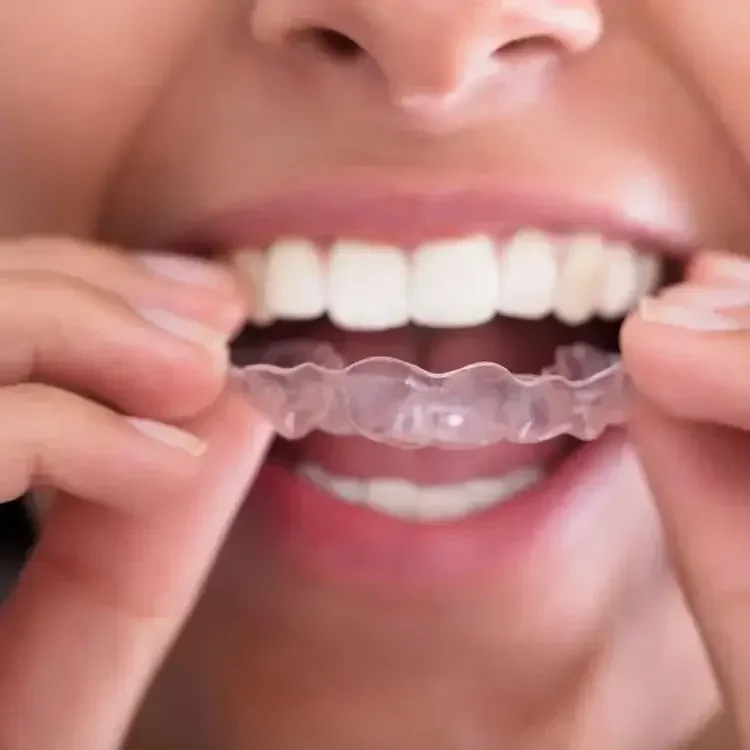
A new tray should feel snug at first, then sit fully over every tooth.
What slows Invisalign down
Wear time is the big one. Aligners need to be in most of the day and night, which in practice means around 20 to 22 hours. Take them out only to eat, to drink anything other than water and to brush. Long breaks give teeth time to drift back.
Other common causes are changing trays early, drinking soda with aligners in and missing check-ins. Our post on how to speed up your Invisalign results covers the habits that make the biggest difference.
Getting to us from Glendale
Our Panorama City office is about 15 miles from Glendale, usually a 25 to 30 minute drive up the I-5. You can also start with a virtual consultation by sending photos of your teeth, so you know whether Invisalign suits you before you make the trip.
If you're ready at your first visit, treatment can start the same day, with your aligners ordered once the plan is agreed. Retainers are included in all treatment plans, so your result stays in place afterwards.
Frequently asked questions
Is it normal for Invisalign to feel tight?
Yes. A new tray usually feels tight for a day or two, which shows it's applying pressure. The feeling should ease as your teeth settle.
What should I do if my aligner doesn't fit properly?
Call the office before moving to the next tray. A poor fit can mean a tooth isn't tracking, and it's much easier to correct early.
How many hours a day do I need to wear Invisalign?
Around 20 to 22 hours. Remove the aligners only to eat, drink anything other than water and brush.
Do I need a retainer after Invisalign?
Yes. Teeth need holding in their new position, and retainers are included in every treatment plan at Textbook Orthodontics.
How long does Invisalign take?
It depends on how far your teeth need to move. Dr. Nourian estimates your treatment time at the consultation, after reviewing your scan.
Can teenagers have Invisalign?
Yes, as long as they wear their aligners consistently. Wear time matters even more for teens, because a tray left in a locker isn't moving any teeth.
Start Invisalign in Glendale with a free consultation
Your free first visit includes a clinical exam, digital X-rays and photographs, a 3D iTero scan and a treatment plan with all your options. Dr. Nourian sees every patient personally, so the orthodontist checking your progress is the one who planned it. Book a consultation for Invisalign in Glendale at our Panorama City office.
Panorama City: 8424 Van Nuys Blvd, Panorama City, CA 91402. Call (818) 510-3440.
Los Angeles: 1563 S. Western Ave, Los Angeles, CA 90006. Call (213) 933-6370.
Hawthorne: 14248 Hawthorne Blvd, Hawthorne, CA 90250. Call (310) 751-3098.
Whittier: 14564 Whittier Blvd, Whittier, CA 90605. Call (562) 693-8202.
Book a free consultation: https://textbookorthodontics.com/consultation