
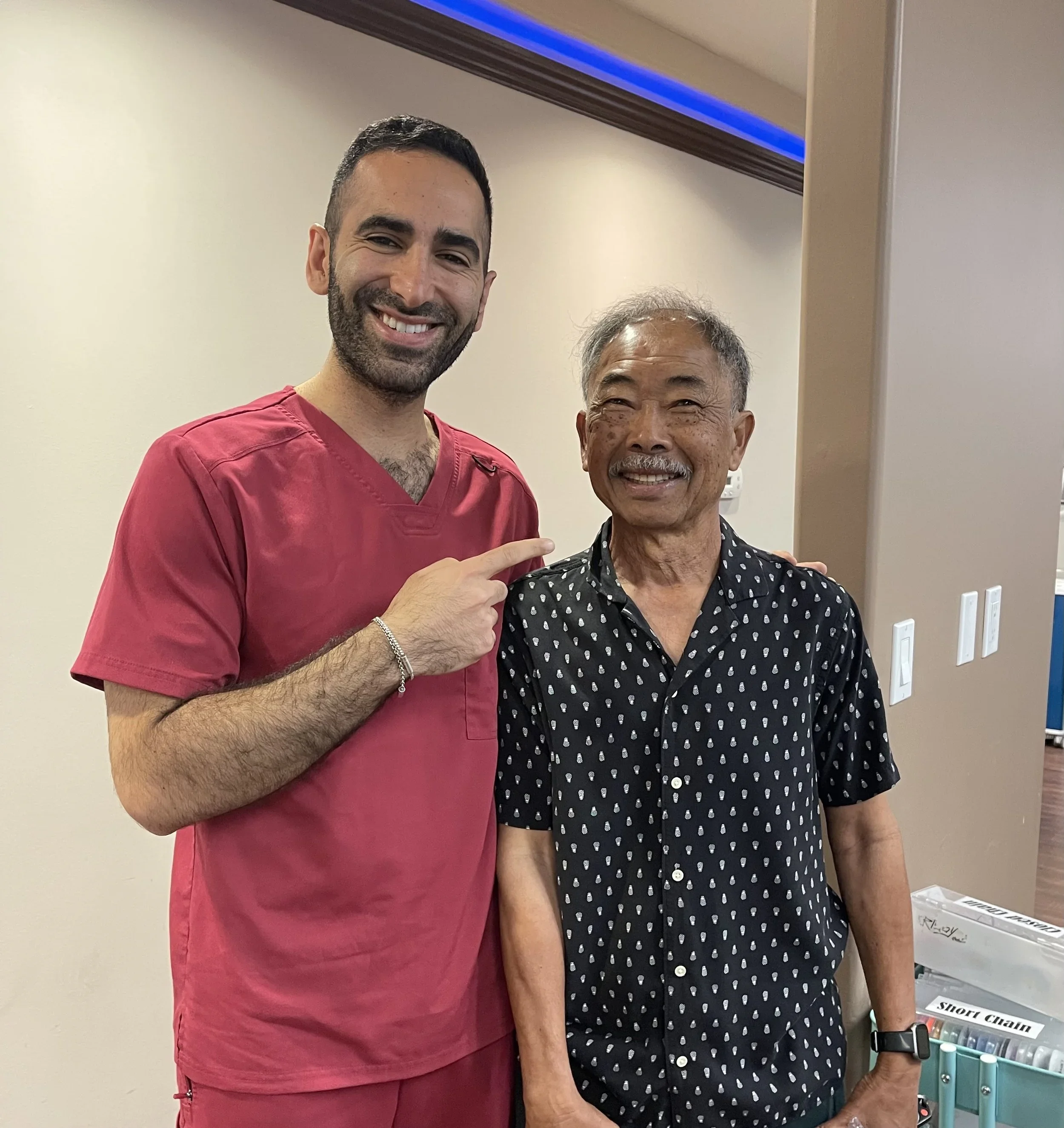
A well-fitted guard protects the dental work you’ve already invested in.
Yes. A custom night guard takes the force of nighttime grinding so your crowns, fillings and natural teeth don't have to. It won't stop the habit, but if you're looking into night guards in Los Angeles County to protect work you've already paid for, a guard made from impressions of your own teeth is the simplest way to do it.
What grinding does to teeth and dental work
Grinding and clenching can go on for hours a night, with nothing between your teeth to soften the pressure. Over time that can lead to cracked or chipped teeth, worn enamel, jaw pain, headaches and TMJ problems.
Crowns and fillings face the same forces. A crown can chip, and the edges of a filling can break down. Most people don't know they grind. As the American Dental Association points out, dentists and hygienists are often the first to notice, from chipped teeth or worn spots along the edges.
Signs you might be grinding at night
Many people only find out from a partner who hears it. Other clues are waking with a sore or tired jaw, morning headaches, teeth that look flatter or shorter than they used to and small chips along the edges. If a crown or filling keeps breaking, grinding is worth ruling out.
How a night guard protects your dental work
A night guard sits between your upper and lower teeth while you sleep. It keeps them from grinding directly against each other and spreads the pressure of clenching more evenly across your bite.
With a guard in, the guard takes the wear instead of your crown. A worn guard is much easier to replace than a cracked crown.
Custom fit or store-bought?
A custom guard is made from impressions of your teeth, so it follows the exact shape of your bite, including any crowns or fillings. That's how Textbook Orthodontics makes them. A store-bought guard is shaped for an average mouth. If it sits unevenly, it can press harder on some teeth than others, which is the opposite of what you want around dental work.
The ADA makes the same point: a custom guard gives the closest, most comfortable fit, and guards sold online or in stores may not offer the same protection.
Night guards with crowns and new dental work
You can wear a night guard over crowns and fillings, and it's one of the easiest ways to protect them. Timing is the thing to watch. If a new crown or filling changes the shape of a tooth, an older guard may no longer fit properly. If your guard feels tight, loose or rocks after dental work, bring it in so the fit can be checked.
The same applies after orthodontic treatment. Grinding puts steady pressure on teeth, so patients who grind are often good candidates for a guard once braces or aligners come off. Our posts on night guards after braces and night guards versus retainers explain the difference.
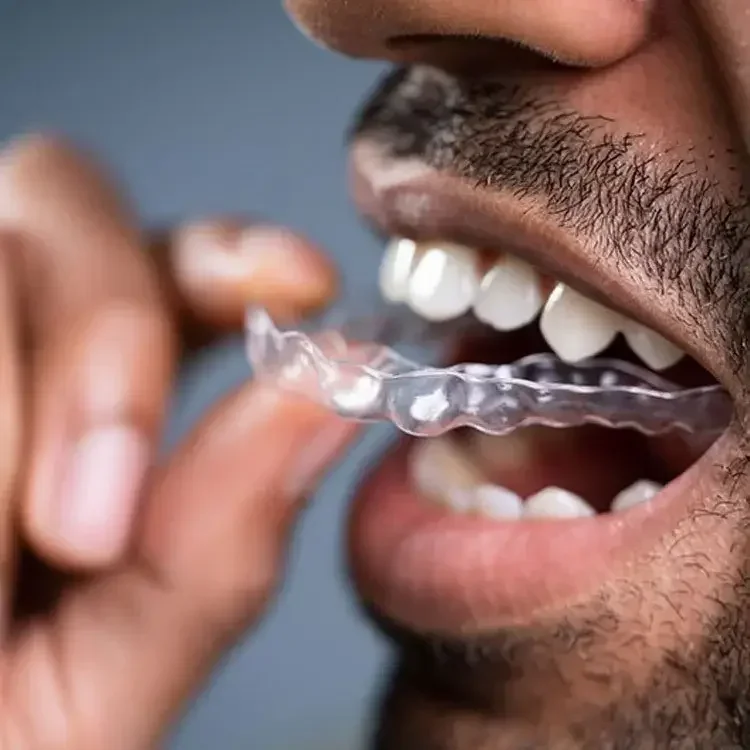
A custom guard is made from impressions of your teeth, including any crowns or fillings.
Why are you grinding in the first place?
Stress and anxiety are common causes. So are a misaligned bite and sleep disorders such as sleep apnea. Each one points to a different next step, which is a good reason to have a guard fitted by someone who can look at the cause as well as the teeth.
If your bite is part of the problem, orthodontic treatment may help. Persistent jaw pain is worth getting checked too, and our TMJ treatment page explains the options. If you snore heavily or wake up tired, talk to your doctor about your sleep as well.
Living with a new guard
Some people notice mild discomfort, or slight difficulty speaking or swallowing, for the first few nights. This usually settles within a few days.
Care is simple. Rinse the guard with water before and after use, brush it with a toothbrush and toothpaste or a cleaning solution and store it somewhere clean and dry. With proper care, a night guard should last several years. Our post on when to replace your night guard covers the signs it's time for a new one.
Night guard or sports guard?
They aren't interchangeable. A night guard is built for nighttime grinding. A sports guard has extra cushioning for impact and isn't comfortable to sleep in. If you play contact sports, ask about sports mouthguards as well.
Frequently asked questions
Will a night guard stop me from grinding?
No. It doesn't stop the habit, but it protects your teeth and dental work from the damage grinding causes.
Is a night guard uncomfortable to wear?
It can feel strange for the first few nights. Most people get used to it within a few days.
How long does a night guard last?
With regular cleaning and proper storage, several years.
Do I need a new night guard after a crown?
Not always. If the crown changed the shape of the tooth, the guard may not fit evenly anymore, so bring it to your next visit to be checked.
Can a night guard help with jaw pain?
It can. By spreading the pressure of clenching more evenly, a guard can reduce jaw pain and morning headaches linked to grinding.
Get fitted for night guards in Los Angeles County
At your visit, we take impressions to make a custom guard that fits your teeth and any dental work you already have. Book a free consultation for night guards in Los Angeles County at the office nearest you.
Panorama City: 8424 Van Nuys Blvd, Panorama City, CA 91402. Call (818) 510-3440.
Los Angeles: 1563 S. Western Ave, Los Angeles, CA 90006. Call (213) 933-6370.
Hawthorne: 14248 Hawthorne Blvd, Hawthorne, CA 90250. Call (310) 751-3098.
Whittier: 14564 Whittier Blvd, Whittier, CA 90605. Call (562) 693-8202.
Book a free consultation: https://textbookorthodontics.com/consultation